
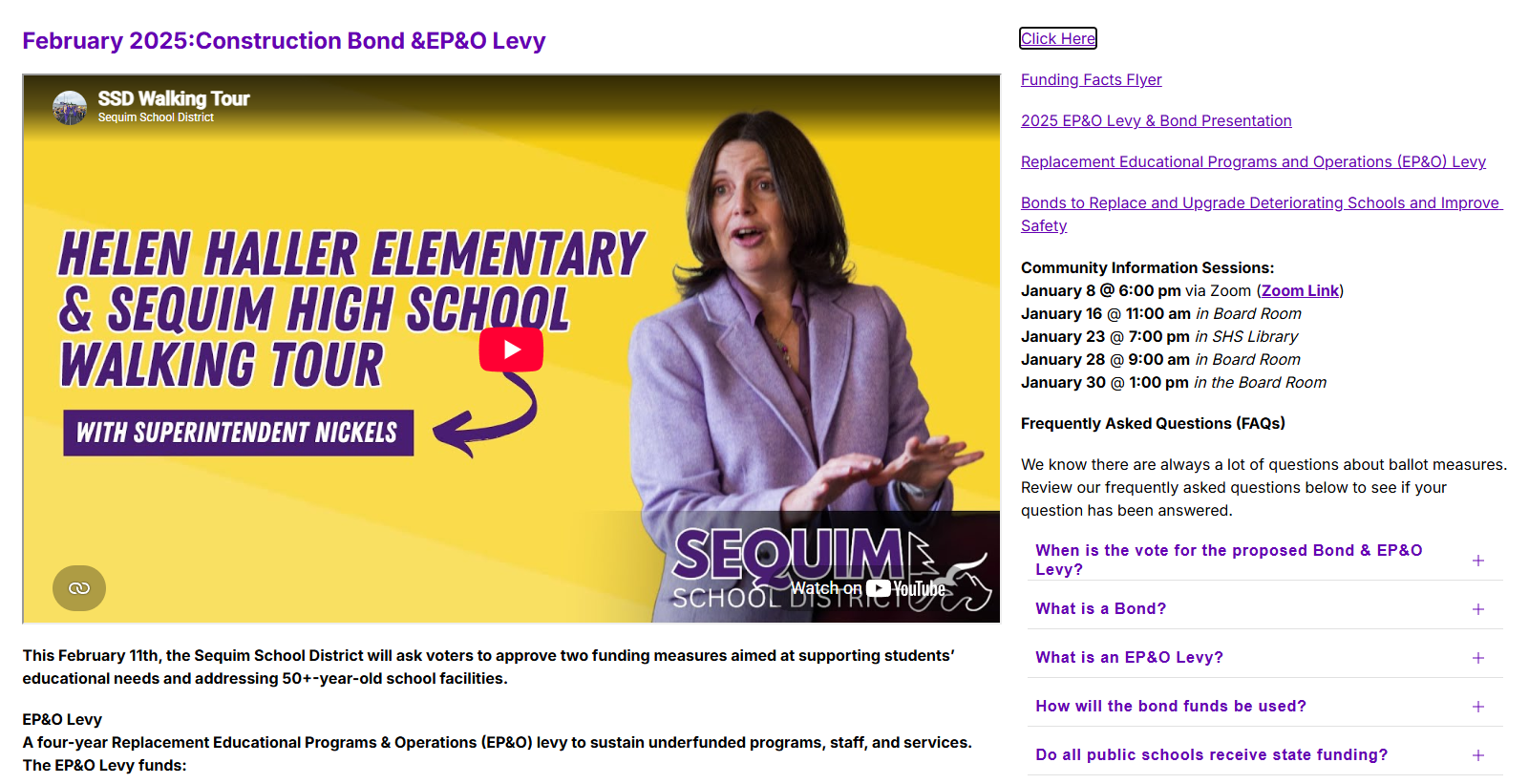
A snapshot of the 2025 bond campaign’s public information effort. I helped shape the messaging and produced the featured school tour video to give voters a clearer look at the school districts aging facilities. This image is a screenshot; links are not interactive. Scroll down to see how the campaign developed.
The Sequim School District entered the 2025 campaign with a long history of unsuccessful school construction measures. Four consecutive bond attempts failed between 2014 and 2016. The most recent proposal, a $54 million measure in February 2016, received 57.4% of the vote. This was a strong majority, but still short of Washington’s required 60% supermajority.
The last successful school construction bond had been approved in February 1996. Nearly three decades later, the campaign needed to overcome voter fatigue, financial concerns and skepticism created by repeated failed attempts.
The communications challenge was larger than explaining aging buildings or deferred maintenance. We needed to help voters understand that modern, functional schools are essential not only for students, but for the entire community.
Turning a Yard Sign Into an Organizing System
My role grew organically as campaign needs emerged. Rather than relying on a single message or communications channel, I developed practical tools and original content that helped the campaign organize volunteers and reach voters.
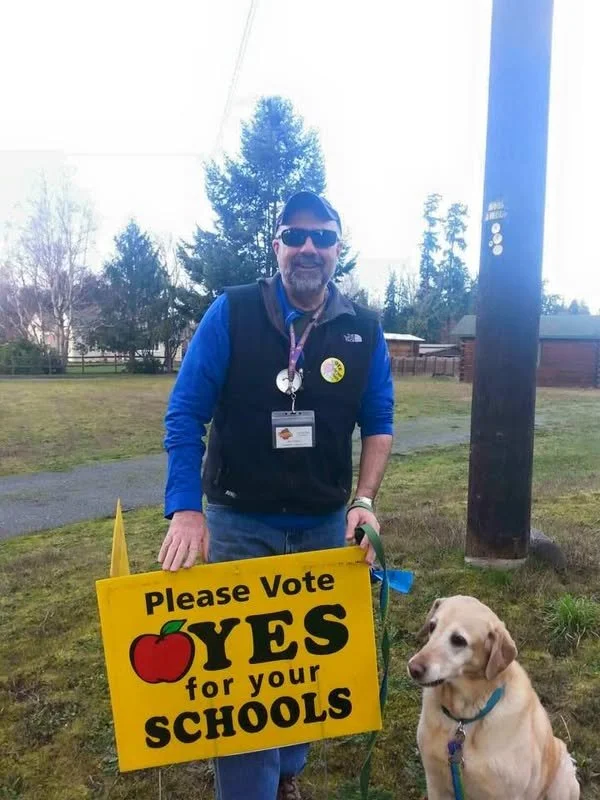
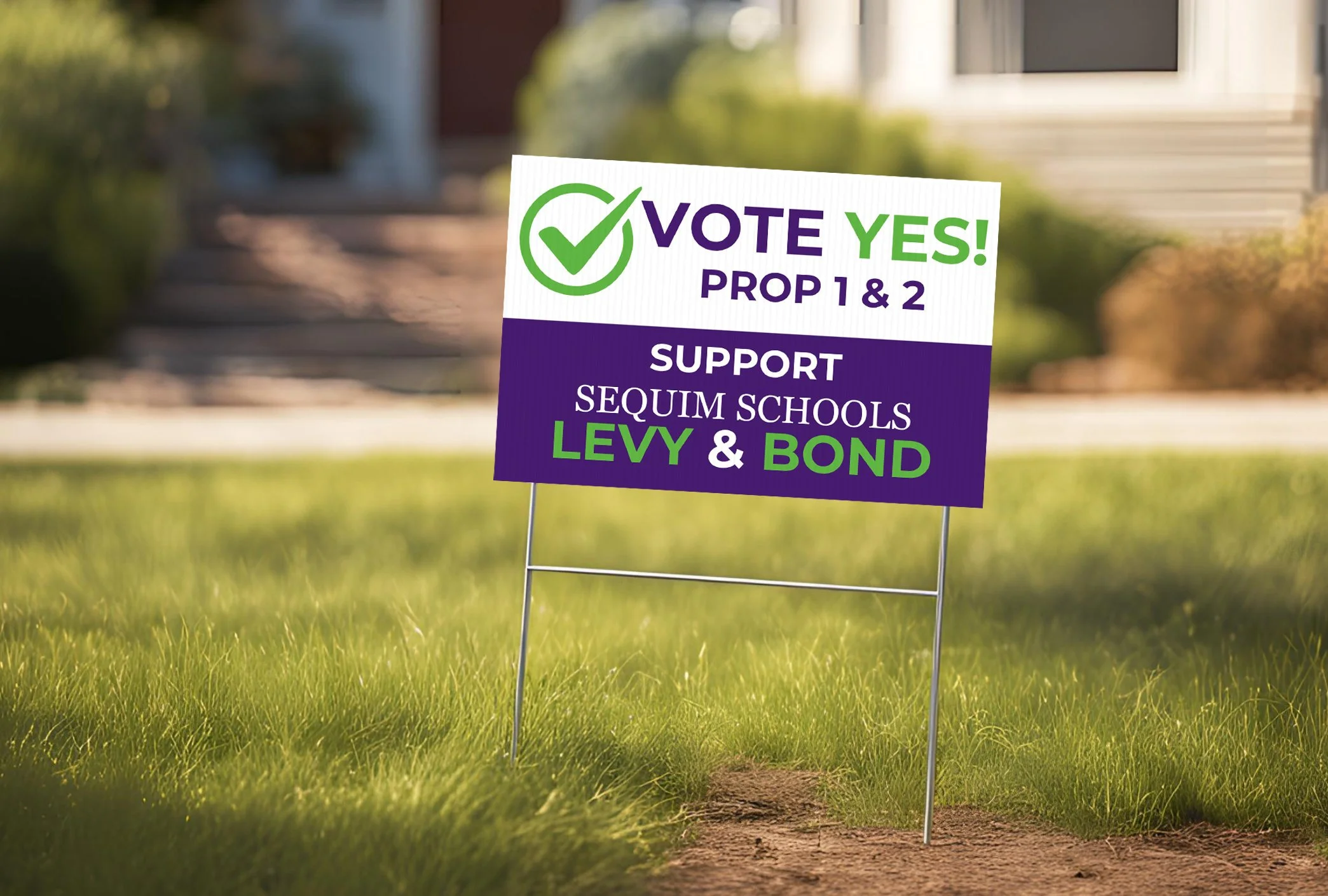
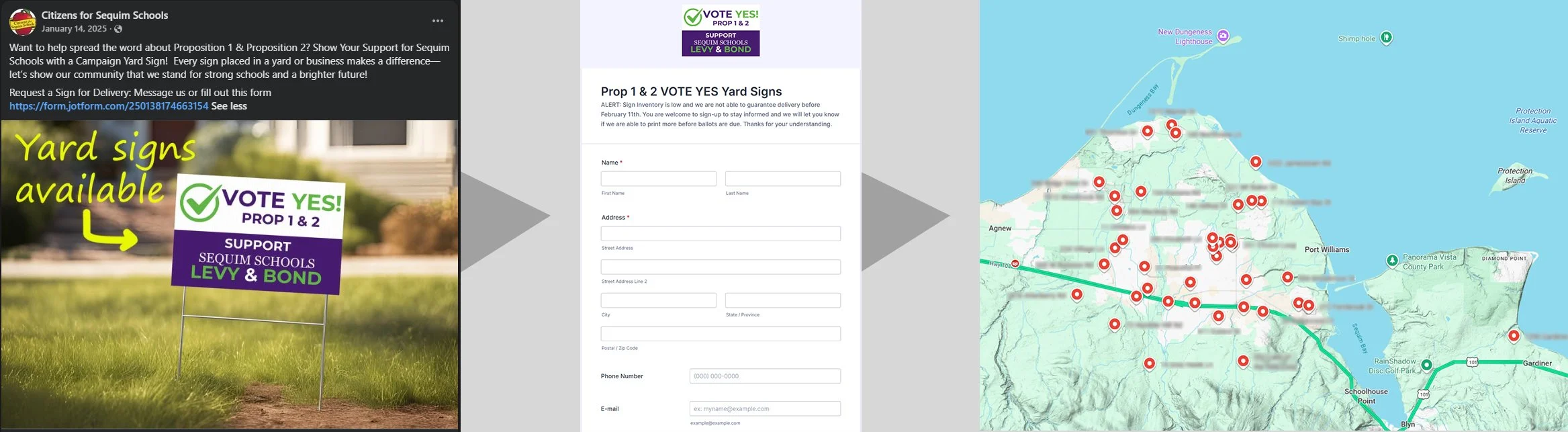
During a campaign meeting, a committee member presented a yard sign they had designed as their own expression of support. I realized this was an opportunity to turn that individual effort into a broader community campaign. I created an online signup form and promoted the sign through an established Facebook page. In less than a week, 101 people across Sequim had requested signs.
The signup form fed directly into a shared spreadsheet used by volunteers coordinating deliveries. After spending an afternoon helping deliver signs from a printed address list, I realized the process could be made much more efficient. I created and maintained a shared Google Map that allowed volunteers to divide delivery areas, track completed stops and reduce unnecessary driving time and mileage. The same map became equally useful when it was time to collect the signs after the election.
Designing a Campaign Doorcard
The school district produced a four-page informational mailer explaining the proposal to voters. Because public agencies are limited in how they can advocate for ballot measures, the district’s materials needed to remain informational and neutral. Citizens for Sequim Schools, as an independent political committee, had more flexibility to communicate why supporters believed the measure should pass.
Working with the campaign’s door-to-door volunteer coordinator, I wrote and designed a postcard that volunteers could leave with residents. The piece was designed to complement the district’s official mailer while providing a clearer call to action from community supporters.
Building a Diverse Social Media Content Plan
Community members were understandably wary after years of unsuccessful bond attempts. I focused on creating content that people could share with confidence and that reflected a unified, community-centered effort.
-
Original campaign updates and event promotions
Reshared content from community supporters
Clear explanations of voter eligibility
A series of vertical testimonial videos
Campaign and volunteer photo galleries
Local media coverage
Participation prompts and calls to action
Information about school tours and opportunities to learn more
The variety helped extend the campaign’s reach, but one opening continued to surface in conversations: Once people saw the actual condition of the schools, their perspective often changed. That insight led to the campaign’s most important communications asset.
The finished video gave voters a direct look at deteriorating infrastructure, outdated classrooms and facility limitations that were difficult to fully communicate through statistics or written descriptions alone.
The district shared the video through its own channels, where it became one of the campaign’s most widely shared and discussed pieces of content. It received hundreds of shares on Facebook, significantly more than most campaign posts and generated strong engagement both online and in the community. It transformed an abstract funding proposal into a visible, understandable community problem.
The virtual tour later received a 2025 Award of Excellence in the Video – Single category from the National School Public Relations Association.
Bringing the School Tour to the Community
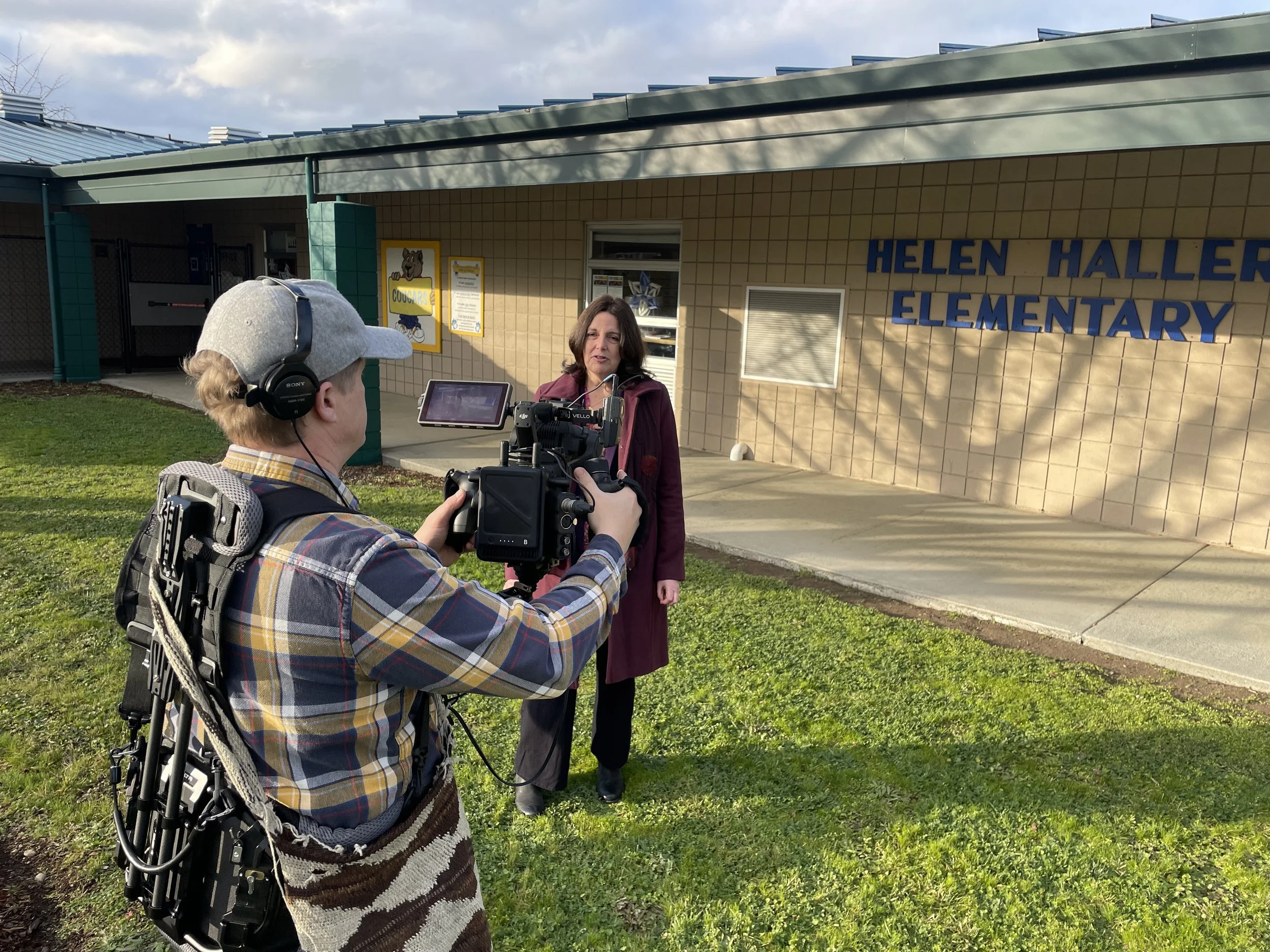
The school district had expressed interest in producing a video that showed the condition of its facilities but had limited technical capacity and staff time. Working with the district’s public information officer and superintendent, I helped identify locations, organized talking points and filmed content for a seven-minute tour in an afternoon.
The Results
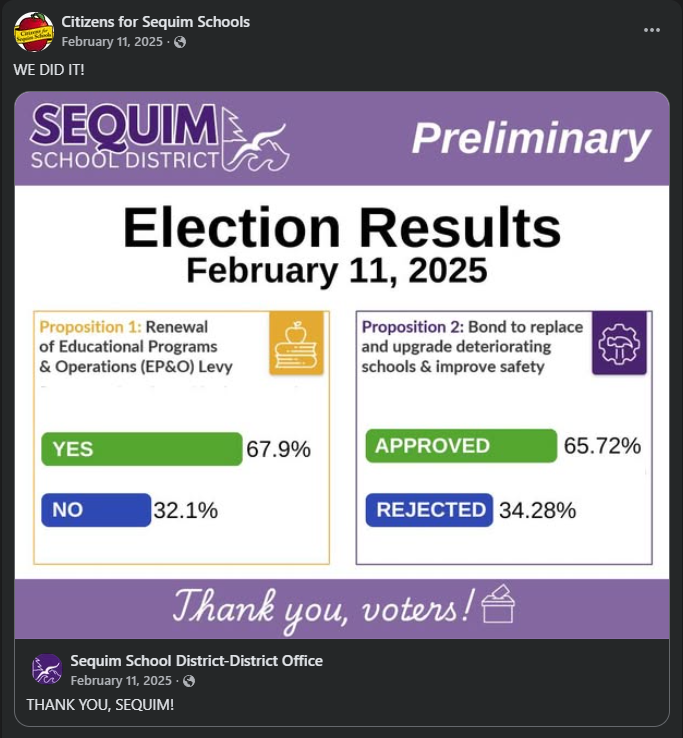
I know many people who questioned if they should remain in the community if the bond did not pass. I heard school officials talk about crisis contingency plans that made my heart ache. The successful vote prevented the district from being forced into increasingly expensive emergency repairs and crisis contingency measures. More importantly, it gave students, educators and families renewed confidence in the future of Sequim’s schools.
No single sign, postcard, Facebook post or video passed the bond. The result came from years of work by school leaders, volunteers, parents, educators, students and community advocates. It was a long-awaited moment of relief, shared optimism and a powerful reminder of what a community can accomplish when we understand what is at stake and come together.